More Categories
CarpentersCleanersConcrete More
Resources
Write a Review Get Listed on Networx Contractors Login Heating & Cooling Tips
Home > Articles & Tips > HVAC Filters > The Most Efficient HVAC Filters

The Most Efficient HVAC Filters

cleaning grout

Whether you live in a city like Chicago and your turning up the heat for the winter or you live in a warm climate like Miami and you need the air conditioning on, it’s important to understand how HVAC filters work and what the best one for your home is. An HVAC filter regulates your home’s air quality and protects you from inhaling dangerous particles in the air. While the air in your home may look clean, in actuality it contains millions of tiny dust particles.

Different filters have different ratings provided by the American Society of Heating, Refrigerating and Air-Conditioning Engineers (ASHRAE). The better the filter, the smaller the particles have to be in order to get through. A filter’s efficiency is rated in MERVs (Minimum Efficiency Reporting Value), and a rating of MERV 5 is the least efficient type of filter available while a rating of MERV 16 is the most efficient. Experts suggest installing a filter with no less than MERV 8 in order to maintain quality air and efficient operation of your HVAC system.

Fiberglass Filters

While fiberglass filters are one of the cheapest filters available, they’re also the least effective at filtering out air pollutants. The fibers in in the filter wear away shortly after installation and can release harmful fiberglass into the air you breathe.

Pleated Filters

Pleated filters are safer and perform better than fiberglass. They are usually made of polyester fabric which is woven tightly together to catch air pollutants. The filter is designed with pleats in order to create a larger surface with which to capture air pollutants. Newer High Efficiency Particle Arresting (HEPA) filters are also available. These have even more pleats and are one of the most effective filters for providing quality air free of allergens, mold and other harmful pollutants.

Reusable Filters

While reusable filters are popular and relatively inexpensive, there are also some downsides. One of the major disadvantages of these filters is that they are difficult to clean properly. You must wash the filter with water or a liquid cleaning substance and let it dry completely. However, as a result of the cleaning process the filter can absorb bacteria or mold while drying out as well as chemicals from the cleaning substance.

Electrostatic Filters

These filters are connected to the electricity either through the HVAC unit or by an external energy source and are electrified. When electrified the filter acts as a magnet and attracts pollutants. These are usually the most effective types of filters and often come with a lifetime warranty.

Tips

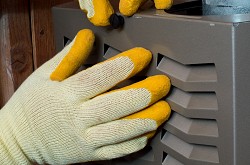
It’s important to understand that the better the filter is, the faster it will accumulate pollutants and become clogged with particles. As a result, filters should be replaced or cleaned every 30-60 days depending on how much build-up there is. If left dirty for an extended period of time, your HVAC will not function as efficiently and could lead to electrical problems that require the help of a qualified electrician. Be sure to contact a professional HVAC contractor if you’re not comfortable replacing your own filters, or to help you select the best type of filter for your home’s needs and budget.

Get Free Quotes - Qualified HVAC Contractors will contact you with FREE quotes
  • *Name:
  • *Phone:
  • *Zip Code:
  • Email:
Request Heating & Cooling Quotes
Qualified HVAC Contractors will
contact you with FREE quotes
*Name:
*Phone:
*Zip Code:
Email:
Brief Project Description:

Find Hvac Contractors In
Your Area

Enter Zip Code:
Zip Code Lookup

Some of our cities:
Copyright © 2005-2012 Networx Systems LLC :: Your Home Improvement Network. All rights reserved.